Your driveway is stained. Green algae is spreading across the siding. Dark streaks are making the roof look older than it is.
You know your home needs an exterior cleaning, but should you choose power washing or soft washing?
The answer depends on the surface. Power washing is effective on durable materials that can withstand high pressure. Soft washing uses lower pressure and cleaning solutions to treat surfaces that could be damaged by a powerful stream of water.
Choosing the wrong method can strip paint, damage siding, loosen roofing materials, or force water into places it should not go. Here is how the two methods differ and how to determine which one your Baltimore property needs.
What Is Power Washing?
Power washing uses a high-pressure stream of water to remove dirt, grime, stains, and buildup from hard exterior surfaces.
It works through mechanical force. The pressure breaks the bond between the dirt and the surface so the buildup can be rinsed away.
Power washing is generally best for strong, durable materials such as:
- Concrete driveways
- Sidewalks and walkways
- Brick and stone
- Some patios
- Certain decks, depending on the material and condition
- Other hard surfaces with embedded grime
It can be especially effective on oil spots, tire marks, mud, and years of dirt collected on concrete.
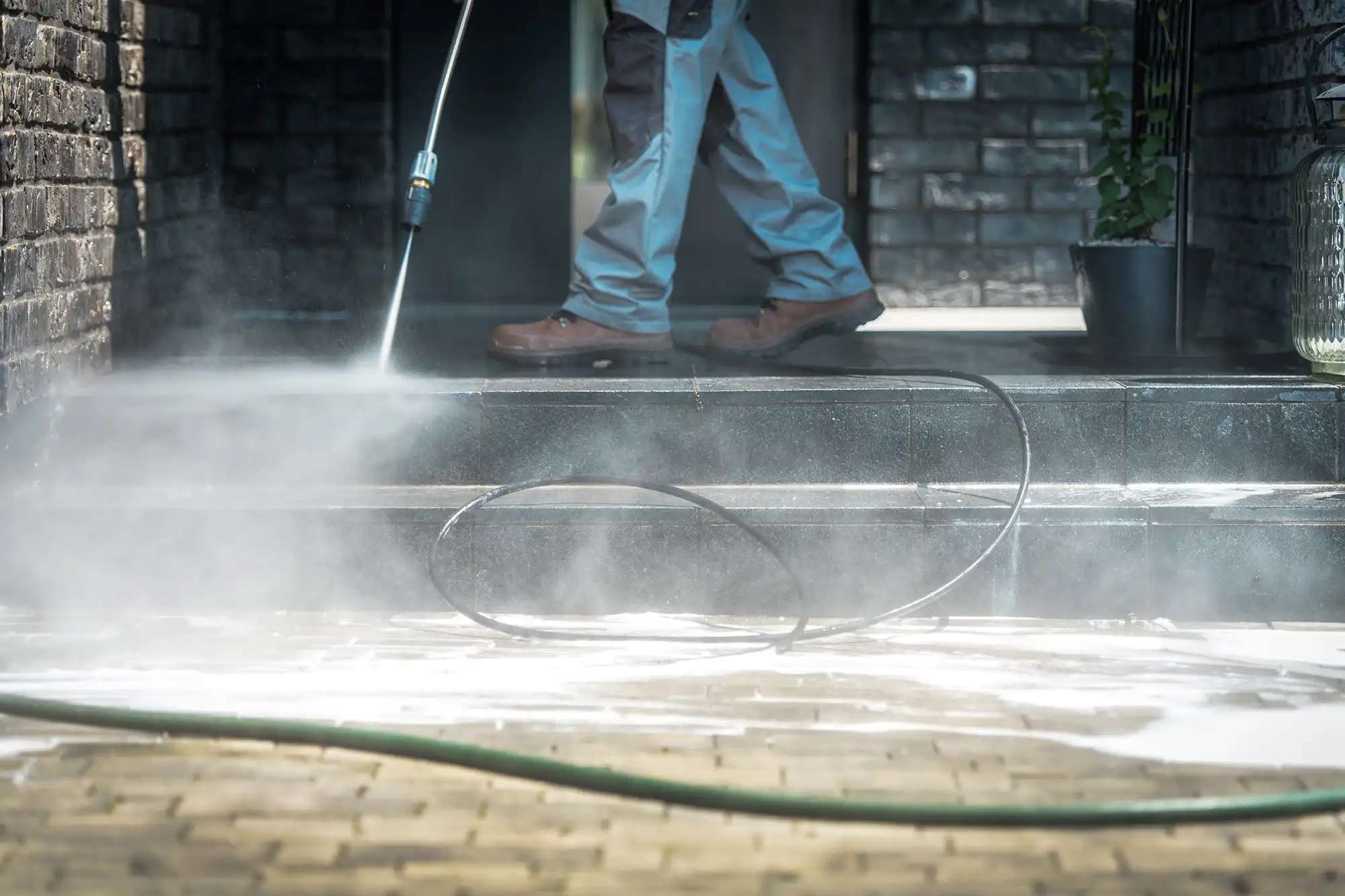
However, more pressure does not always mean a better clean. Using excessive pressure or holding the nozzle too close can leave marks in concrete, damage mortar, splinter wood, and strip protective finishes. The pressure must be adjusted for the condition and material of each surface.
What Is Soft Washing?
Soft washing uses low water pressure combined with a cleaning solution designed to loosen and remove organic buildup.
Instead of relying primarily on force, the cleaning solution treats contaminants such as algae, mold, mildew, moss, dirt, and other organic stains.
After the solution has time to work, the surface is gently rinsed. This makes soft washing a better choice for areas that need cleaning but cannot safely handle high pressure.
Soft washing is commonly used for:
- House siding
- Asphalt shingle roofs
- Painted surfaces
- Stucco
- Fences
- Delicate exterior finishes
- Some wood and composite surfaces
It is not simply power washing with the machine turned down. The cleaning solution, application process, dwell time, and rinse method all need to match the surface being treated.
Power Washing vs. Soft Washing: The Main Differences
The biggest difference is how each method removes buildup. Power washing relies mainly on water pressure. Soft washing relies mainly on the cleaning solution, followed by a low-pressure rinse.
- Water pressure: Power washing uses high pressure, while soft washing uses low pressure.
- Cleaning action: Power washing removes grime through mechanical force. Soft washing treats organic growth with cleaning solutions.
- Best applications: Power washing works best on durable hard surfaces. Soft washing is designed for more delicate exterior materials.
- Typical surfaces: Power washing is commonly used on concrete and masonry. Soft washing is commonly used on roofs and siding.
- Primary risk: Excessive pressure can damage sensitive materials. Soft washing reduces pressure-related risk but still requires the correct solution and application process.
Neither method is always better. The right choice depends on what is being cleaned, what caused the staining, and the condition of the material.
Which Method Should Be Used on Each Surface?
Driveways and Concrete
Power washing is usually the best choice for driveways, sidewalks, and concrete patios.
Concrete can generally tolerate more pressure than roofing or siding. A professional cleaning can remove embedded dirt, tire marks, algae, and many common stains.
Older, cracked, painted, or previously sealed concrete may require lower pressure or a different approach. The surface should be inspected before cleaning begins.
House Siding
Most siding should be cleaned with a soft washing or low-pressure method.
High pressure can damage painted finishes, crack certain materials, or push water behind siding panels. Manufacturers may also have specific cleaning instructions based on the siding material.
Soft washing treats algae and mildew without using unnecessary force. It is often the safer choice for vinyl, painted siding, stucco, and other sensitive finishes.
Roofs
Asphalt shingle roofs should not be power washed.
High-pressure water can damage shingles and remove protective granules. A controlled soft-washing process is the appropriate method for treating the algae and dark streaks commonly seen on residential roofs.
Roof cleaning also involves fall hazards and slippery cleaning solutions. It should be handled by a trained professional with the correct equipment and safety procedures.
Decks and Patios
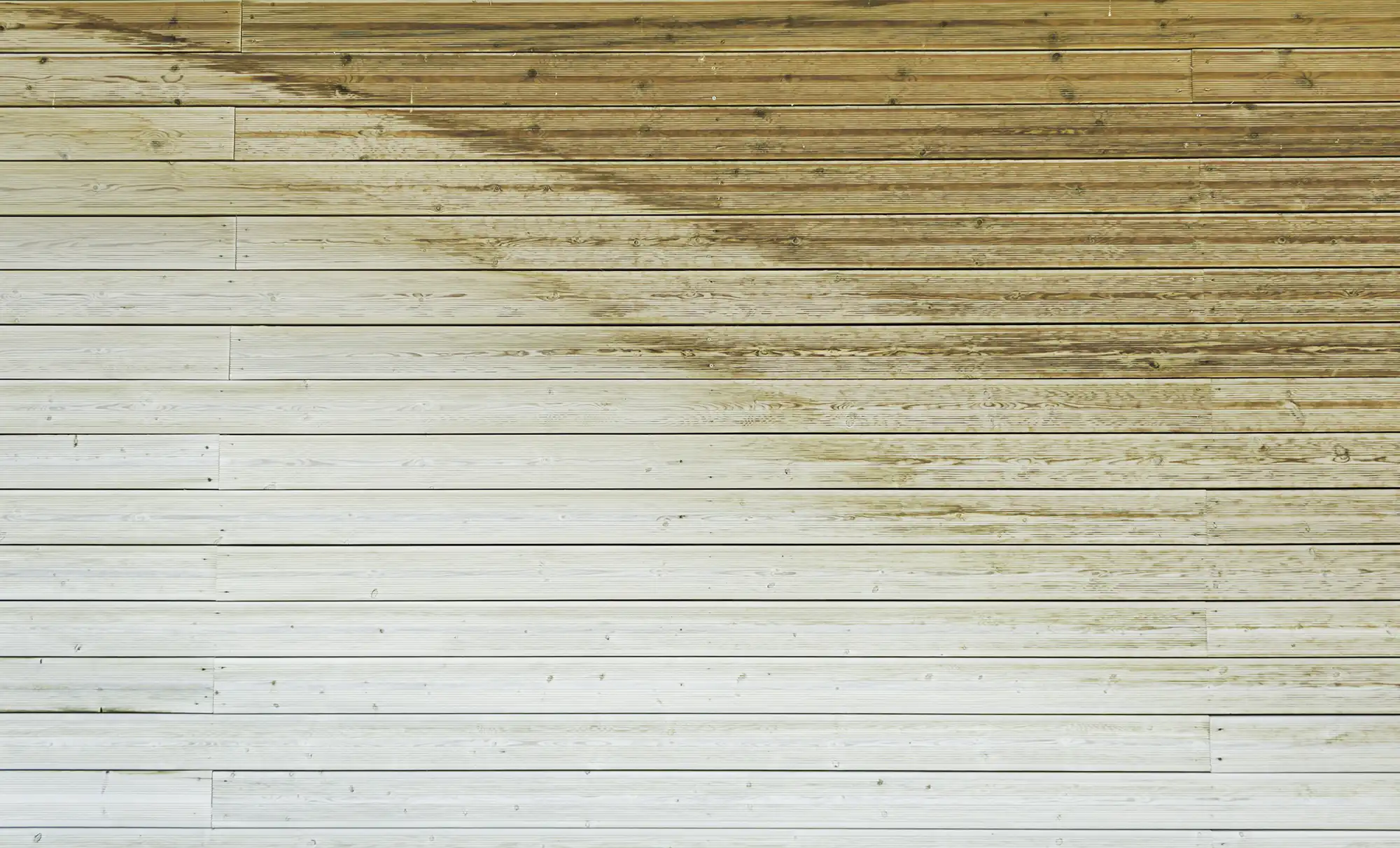
The right method depends on the material. Concrete and some composite patios may tolerate power washing. Wood decks require considerably more care because too much pressure can raise the grain, create lines, or splinter the boards.
A professional should evaluate the material, age, finish, and condition of the deck before selecting the pressure and cleaning solution.
Brick and Stone
Brick, stone, and masonry can often be power washed, but their condition matters. Older brick, loose mortar, cracked joints, and delicate natural stone may require reduced pressure. A surface that looks strong from a distance may still have vulnerable areas that need to be protected.
Fences and Painted Surfaces
Soft washing is usually the safer option for fences and painted surfaces. Excessive pressure can strip paint, damage wood fibers, or leave permanent marks. Low pressure allows the cleaner to do the work while protecting the finish underneath.
Why Baltimore Homes Develop Algae and Exterior Buildup
Baltimore properties go through humid summers, rain, pollen, falling leaves, and seasonal temperature changes. Shaded and moisture-prone areas can develop green algae, mildew, and dark staining over time.
The north-facing side of a home may show buildup sooner because it receives less direct sunlight. Roof sections beneath trees and siding near landscaping may also stay damp longer.
Regular exterior cleaning can improve curb appeal and prevent buildup from becoming more difficult to remove. The important part is using a method that cleans the surface without shortening its useful life.
Can You Power Wash Your Home Yourself?
Rental machines make DIY power washing look simple, but incorrect pressure, distance, nozzle selection, or technique can cause damage quickly.
Common DIY mistakes include:
- Using high pressure on siding or roofing
- Holding the nozzle too close to the surface
- Creating visible lines in concrete or wood
- Spraying upward and forcing water behind siding
- Stripping paint or protective coatings
- Using the wrong cleaning solution
- Allowing cleaning products to dry on the surface
- Failing to protect plants, windows, and nearby materials
Professional exterior cleaning is not just about owning a pressure washer. It requires identifying the material, choosing the appropriate method, and testing the process in a controlled area before treating the entire surface.
How GVC Chooses the Right Cleaning Method
GVC Cleaning Company does not use one method for every exterior surface.
Before starting, we evaluate:
- The type of surface
- Its age and current condition
- The kind of dirt or organic growth present
- Nearby landscaping and materials that need protection
- The appropriate pressure, solution, and rinse method
We use power washing for durable surfaces that need more cleaning force and soft washing for sensitive areas that require a gentler approach.
The goal is not to use the strongest equipment possible. The goal is to get the surface clean while protecting your property.
When Should You Schedule Exterior Cleaning?
Many Baltimore homeowners benefit from an exterior cleaning approximately once a year, but the right schedule depends on the property.
You may need service sooner if you notice:
- Green buildup on siding
- Black streaks on the roof
- Slippery algae on walkways or patios
- Heavy stains on the driveway
- Mold or mildew in shaded areas
- Dirt that regular rinsing does not remove
- Reduced curb appeal before selling or hosting an event
Roofs and some siding materials may need cleaning less frequently. Properties surrounded by trees, exposed to heavy shade, or affected by moisture may need attention more often.
Frequently Asked Questions
Is soft washing safer than power washing?
Soft washing is safer for delicate surfaces because it uses much lower water pressure. However, the cleaning solution still needs to be selected, diluted, applied, and rinsed correctly. Both methods require proper training and surface assessment.
Does soft washing remove mold and algae?
Soft washing is specifically designed to treat organic buildup such as algae, mold, mildew, and moss. The solution loosens and treats the growth before the surface is rinsed at low pressure.
Can you power wash vinyl siding?
High pressure can damage siding or force water behind it. A low-pressure or soft-washing method is generally the safer choice. The exact process should follow the siding manufacturer’s care instructions.
Can you power wash an asphalt shingle roof?
No. High-pressure washing can damage asphalt shingles and remove their protective granules. Asphalt roofing industry guidance recommends avoiding power washers on asphalt roofs. A professional low-pressure treatment should be used instead.
How much does power washing cost in Baltimore?
The cost depends on the surface, square footage, level of buildup, accessibility, and services included. GVC provides a free estimate based on the specific needs of your property, so you know the price before work begins.
Can I combine exterior cleaning with house cleaning?
Yes. GVC offers exterior washing, gutter cleaning, and interior cleaning services. Bundling services can simplify scheduling and may qualify for a discount. Ask about available options when requesting your estimate.
Get a Free Exterior Cleaning Estimate in Baltimore
Not sure whether your property needs power washing or soft washing? You do not have to figure it out alone.
GVC Cleaning Company provides professional power washing and soft washing services throughout Baltimore and surrounding areas. We inspect each surface and choose the appropriate cleaning method to remove buildup without unnecessary damage.
We serve Baltimore City, Towson, Owings Mills, Pikesville, Ellicott City, Catonsville, White Marsh, Middle River, Parkville, Glen Burnie, Lutherville-Timonium, and nearby communities.
Call 443-714-1374 or request your free estimate today.